
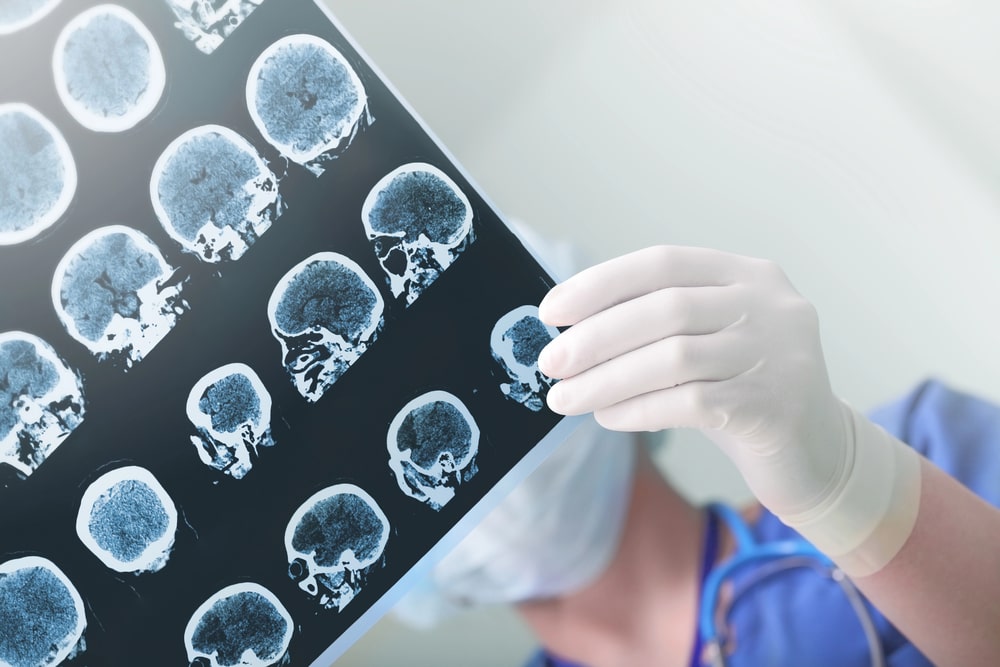


Traumatic brain injuries are among the most misunderstood injuries in personal injury litigation. They’re often invisible on standard imaging. Symptoms can take days, weeks, or even months to fully manifest. And because a person can look and sound perfectly fine in the immediate aftermath of a crash, insurers routinely argue that no real brain injury occurred. Understanding how TBIs are actually diagnosed, and why building a thorough medical record from the beginning is so important, matters for anyone in the Lafayette area dealing with the aftermath of a serious accident.
What Happens in the Brain During a Traumatic Injury
A traumatic brain injury occurs when an external force causes the brain to move inside the skull, or when the skull is penetrated by an object. The movement creates stretching, tearing, and shearing of brain tissue and neural connections that can produce widespread damage even when no visible structural injury appears on imaging.
Car accidents are one of the most common causes of TBI. The rapid deceleration of a crash, even without direct head impact, can cause the brain to collide with the interior of the skull in ways that produce significant injury. Airbag deployment, whiplash forces, and secondary impacts all contribute to the forces involved.
The severity of a TBI is classified using several frameworks, including the Glasgow Coma Scale assessed at the time of injury, the duration of loss of consciousness, and the duration of post-traumatic amnesia. But classification is just the starting point. The functional impact of the injury on daily life, cognitive function, and earning capacity often matters far more than any categorical label.
Standard Diagnostic Tools and Their Limitations
When an accident victim presents to an emergency room after a crash, standard diagnostic imaging typically includes a CT scan of the head. CT scans are effective at identifying acute bleeds, skull fractures, and significant structural damage. They’re much less effective at detecting the diffuse axonal injury and microstructural damage that causes many of the functional deficits associated with mild to moderate TBIs.
The practical consequence is that a significant percentage of people with genuine traumatic brain injuries have normal CT scans. The imaging came back clear, the ER said no brain injury was detected, and the insurer uses that report to argue the head injury claims are exaggerated or fabricated. This is one of the most predictable and damaging dynamics in TBI litigation.
More sensitive diagnostic tools exist and are increasingly accepted in clinical and legal settings:
MRI with advanced sequences including diffusion tensor imaging (DTI) can detect white matter abnormalities and axonal damage that standard CT misses. When a CT is normal but symptoms persist, an advanced MRI often provides objective imaging evidence of the injury that standard tests couldn’t capture.
Neuropsychological testing conducted by a licensed neuropsychologist assesses cognitive function across multiple domains including memory, attention, processing speed, executive function, and language. This testing produces objective, standardized data about how a person’s brain is actually performing compared to expected norms, and it often reveals deficits that are invisible on any imaging study.
Neurocognitive assessment conducted by treating neurologists and neuropsychiatrists documents how the injury has affected daily functioning, work performance, and quality of life through structured clinical evaluation over time.
A Lafayette brain injury lawyer works with medical experts to identify which diagnostic tools are appropriate for a specific injury and makes sure the full diagnostic picture is developed before any settlement is considered.
Why Symptoms Often Don’t Appear Immediately
The delayed onset of TBI symptoms is one of the most clinically documented and legally significant features of these injuries. Adrenaline immediately following a crash can mask symptoms. Post-traumatic amnesia affects a person’s ability to recognize that something is wrong. Inflammation and secondary injury processes in the brain develop over hours and days following the initial trauma.
Headaches, cognitive fog, memory difficulties, irritability, sleep disturbance, and sensitivity to light and sound often emerge or worsen in the days and weeks following an accident. People who seemed fine in the emergency room develop significant functional limitations once the acute stress response subsides.
This delayed presentation creates a documentation problem that insurers exploit aggressively. When someone doesn’t immediately report head symptoms, the gap between the accident and the documented onset of symptoms gets used to argue that the injury isn’t real or isn’t related to the crash. Consistent, contemporaneous documentation of every symptom as it appears, every day, through every medical contact, is the foundation of a defensible TBI claim.
What Early Documentation Actually Looks Like
The documentation that protects a brain injury claim starts from the moment of the accident and continues through the entire treatment period. Practically, this means:
- Reporting any head contact, loss of consciousness, confusion, or disorientation to emergency responders at the scene
- Telling every medical provider about head symptoms, even if the primary complaint is another injury
- Following up with a primary care physician within days of the accident to document emerging symptoms
- Seeking neurological evaluation promptly when symptoms persist or develop
- Keeping a daily symptom journal that captures what’s happening cognitively and functionally, not just physical pain
- Attending all scheduled appointments and following through on all referrals
Gaps in treatment, missed appointments, and failure to report symptoms consistently create openings that defense attorneys use to undermine claims. The medical record becomes the story of the injury, and an incomplete or inconsistent record tells a story that doesn’t match the reality of what a person is experiencing.
Hall-Justice Law Firm LLC represents brain injury victims throughout Lafayette and Tippecanoe County, Indiana. If you or a family member suffered a head injury in an accident and you’re concerned about how to protect that claim, reach out to a Lafayette brain injury lawyer to discuss how documentation and expert support can build the strongest possible foundation for your case.
EXCELLENT Based on 144 reviews Posted on BROOKE EGELHOFFTrustindex verifies that the original source of the review is Google. Justice was very informative & kind & went above & beyond for me in every way she could . I highly recommend this attorney!!!!Posted on Brendan WhisenantTrustindex verifies that the original source of the review is Google. Had an initial consult with the paralegal this morning. She was so polite, and very helpful. Listened, took my info and made the process very easy, in an area where I have a tough time finding attorney's. Thank YouPosted on CHARLIE CIEAZATrustindex verifies that the original source of the review is Google. Mrs Hall did a great job in helping me get the best outcome for my case. I highly recommend her services.Posted on Bryant BryanTrustindex verifies that the original source of the review is Google. I was fortunate to receive help from Susannah and her team. Susannah is a highly knowledgeable expert in her field. Although my requests was relatively straightforward for such an experienced professional, Susannah and her team provided me with outstanding support and answered all of my questions. I recommend discussing your specific situation with Susannah—even if it feels stressful—because she is excellent at analyzing circumstances and presenting clear options and potential actions. I have no doubt that Susannah and her team have the expertise to provide the best insight and guidance in their field.Posted on Jared MarcinkowskiTrustindex verifies that the original source of the review is Google. Process went smoothlyPosted on Luke BeelerTrustindex verifies that the original source of the review is Google. Susannah Hall-Justice is an amazing attorney! She was on top of things every step of the way and I am very thankful for her!Posted on Mrs. BenjaminTrustindex verifies that the original source of the review is Google. I am currently a client of hers. I do get nervous going to court or just simply meeting with her as my lawyer because I never had to be in a situation that required me to need a lawyer! I feel safe with Ms. Hall-Justice because you can just tell she has your best interest! She listens, observes and make sure you are heard! I am praying to God I don’t have to look like what I’m going through because it’s stressful and I just want to go back to my regular life with my children!Posted on Markham CoatsTrustindex verifies that the original source of the review is Google. This attorney is definitely a credit to her craft! She is very personable and never talks down to a client. She makes a person feel like he/she is actually part of what's going on. She negotiated with the prosecutor and i was offered EVERYTHING that I had hoped for and even more! I would definitely hire her again and i highly recommend that you hire her and trust her in what is often a very vulnerable and confusing time.Posted on Joseph MorledgeTrustindex verifies that the original source of the review is Google. When we needed a Lafayette attorney to represent us for various charges, Susannah was all we could have hoped for. She had several charges dropped immediately and the remaining minor charges diverted for good behavior. After two months of good behavior, all charges were dismissed. Susannah and her assistant Erica were responsive, supportive and above all very effective. All at very reasonable rates. I have worked as a criminal defense lawyer in the past and I was very impressed.Posted on Devon JonesTrustindex verifies that the original source of the review is Google. Impressive and refreshing. I called Susannah’s office first thing in the morning to inquire about a minor legal service and left my contact information with her assistant. Susannah personally called me back only a short while later despite how busy she undoubtedly is. It turned out that the legal opinion I required had to be from a practicing attorney in a different state so we didn’t go forward. Still, the fact that she personally returned my call, and was genuinely pleasant and attentive, substantiates her very positive and personal reviews. Not to stray into the negative but what a breath of fresh air compared to most of the attorneys with whom I’ve spoken in this area - routinely terse, rude and bumptious. This (Hall-Justice) is the law office I will call first for any future legal needs. Thank you.