Menu
Lafayette Brain Injury Lawyer
Brain injury representation grounded in more than 25 years of plaintiff-side trial work across Indiana.
If you or someone in your family has suffered a traumatic brain injury, you are probably dealing with something that goes far beyond physical pain. Cognitive changes, lost income, mounting medical costs, and uncertainty about what comes next are all very real. Our Lafayette, IN brain injury lawyer has been representing injured clients since 1997. At Hall-Justice Law Firm LLC, we understand both the legal and human aspect these cases carry. Contact our office for a free case review.
Brain Injury Lawyer Lafayette, IN
A brain injury attorney is a personal injury lawyer who handles claims involving damage to the brain caused by another party’s negligence. These cases can stem from vehicle crashes, falls, construction accidents, medical errors, and other incidents where someone else’s careless or reckless conduct left a person with permanent or long-lasting neurological harm.
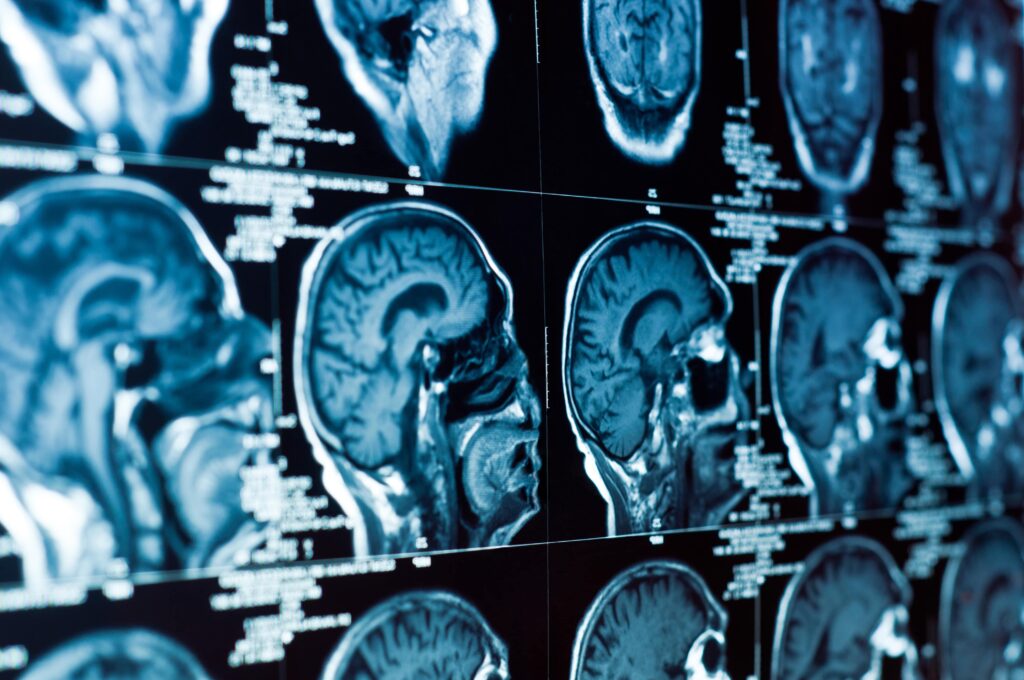
What makes these cases difficult is that brain injuries often don’t look the same on paper as they feel in real life. A person may appear physically intact while struggling with memory loss, personality changes, difficulty concentrating, or chronic headaches that never fully resolve. An experienced Lafayette brain injury attorney understands how to document that difference between what a scan shows and what a client is actually living through.
Types of Brain Injury Cases We Handle in Lafayette
We represent injured clients across a wide range of traumatic and acquired brain injury scenarios. Every case is different, but what they share is the need for thorough investigation, credible medical evidence, and a lawyer who won’t pressure you into a low settlement.
- Car accidents. Rear-end crashes, high-speed collisions, and intersection accidents are among the most common causes of traumatic brain injury. The force of impact can cause the brain to strike the inside of the skull even without a direct blow to the head.
- Truck accidents. Commercial truck crashes often cause severe blunt force trauma. When a passenger vehicle collides with a fully loaded semi, the occupant is at serious risk for diffuse axonal injury or other significant neurological damage. We handle the full scope of liability, including driver negligence and carrier violations.
- Motorcycle accidents. Even riders wearing helmets can sustain serious head trauma. We pursue recovery for motorcyclists who’ve suffered catastrophic injuries caused by inattentive drivers who failed to yield, changed lanes unsafely, or drove under the influence.
- Pedestrian accidents. A pedestrian struck by a vehicle has almost no protection. Head injuries in these cases tend to be severe, and the liable parties can include the driver, a municipality responsible for dangerous road conditions, or both.
- Slip and falls. Property owners in Indiana have a duty to maintain reasonably safe conditions. A hard fall on a concrete floor, down a staircase, or on an icy walkway can produce serious head trauma. The owner may be liable if they knew or should have known about the hazard.
- Bicycle accidents. Cyclists are vulnerable, and brain injuries in bicycle crashes can range from mild concussion to permanent cognitive impairment. We handle cases involving driver negligence, poorly maintained roads, and defective equipment.
- Farming accidents. Falls from equipment and rollovers can produce serious head injuries. These cases involve liability questions specific to agricultural settings, and we have handled them in Indiana.
- Medical malpractice. Delayed diagnosis, surgical error, anesthesia complications, and oxygen deprivation during procedures can all produce brain injuries attributable to negligent care. Establishing the standard of care requires coordination with qualified medical professionals.
- Birth injuries. Oxygen deprivation, forceps misuse, and other delivery errors can result in serious neurological damage to newborns. These cases require careful medical and legal analysis.
- Wrongful death. When a brain injury proves fatal, surviving family members may have a claim. We represent families in Lafayette pursuing accountability for their loss of a loved one.
Why Choose Hall-Justice Law Firm LLC as My Brain Injury Lawyer in Lafayette, IN?
Experience Representing Serious Injury Clients in Indiana
Susannah Hall-Justice, has been handling personal injury matters, including traumatic brain injury claims, since 1997. She earned her J.D. from Indiana University Maurer School of Law and her undergraduate degree from Harvard University. Her practice has always been plaintiff-side, representing injured individuals rather than insurance carriers.
She serves on the Board of Governors of the Indiana Trial Lawyers Association and has previously served as President of both the Tippecanoe County Bar Association and the Carroll County Bar Association. She has lectured at legal seminars on medical billing in injury cases, a subject central to serious brain injury matters, where long-term care costs often determine what a case is worth.
Our personal injury lawyer in Lafayette, IN knows how to build these cases for the benefit of the victim and their needs. Attorney Susannah Hall-Justice has been doing exactly that for more than 25 years.
Recognition and Results
Hall-Justice Law Firm LLC holds the Martindale-Hubbell Client Champion recognition, based on verified client feedback, and also recognized by Lawyer Legion for documented bar involvement. The firm has recovered millions of dollars for injured clients in Indiana. We handle personal injury matters on a contingency basis, so there are no fees unless we recover compensation for you.
Understanding Brain Injury Cases
Damages, Liability, and Compensation for Brain Injury Cases
Brain injury cases involve both economic and non-economic damages. Economic damages include emergency care, hospitalization, surgery, rehabilitation, neurological treatment, lost wages, and projected future earnings.
Non-economic damages address what can’t be found on a receipt. This can entail pain and suffering, loss of the ability to enjoy life the way you once did, and cognitive changes that affect relationships and independence. These losses are real and compensable under Indiana law.
Liability in brain injury cases usually centers on negligence. To establish a claim, an injured person must generally show:
- The defendant owed a duty of care
- That duty was breached
- The breach directly caused the brain injury
- Actual damages resulted
Indiana follows a modified comparative fault system. If the injured person is found partially at fault, their recovery is reduced proportionally. If they are found more than 50% at fault, they cannot recover. Punitive damages may also be available where the defendant’s conduct was especially reckless or intentional, though these are not available in every case.
Important Aspects of a Brain Injury Case
Brain injury claims require more documentation and professional input than most cases. A few things tend to determine how they proceed:
- Early diagnosis matters. Delayed or missed diagnosis of a concussion or more serious TBI can make it harder to connect the injury to the incident. Getting appropriate medical care quickly, and making sure providers document everything, is critical to the foundation of your case.
- Symptom journals help. Because many brain injury symptoms (fatigue, headaches, mood changes, memory gaps) are subjective, detailed notes from the injured person and their family members carry real evidentiary value.
- Life care planning. In serious cases, a life care planner may be needed to project the long-term costs of ongoing care. This affects how damages are calculated and presented.
- Social media can affect your case. Posts that appear to contradict claimed limitations are routinely used by defense counsel and insurance adjusters.
- Insurance tactics are predictable. Adjusters often move quickly after an injury to request recorded statements or offer quick settlements before the full extent of the injury is known.
Brain Injury Case Timeline
Every case is different, but here is a general sequence for how brain injury claims typically unfold in Indiana:
- Medical stabilization and documentation. Before any legal work can be properly done, the injured person needs ongoing medical care and documentation of their diagnosis and treatment.
- Investigation and evidence gathering. We collect accident reports, surveillance footage, medical records, witness statements, and other evidence to establish liability and damages.
- Demand and negotiation. Once the medical picture is reasonably complete, we prepare a demand to the at-fault party’s insurer and enter negotiations.
- Filing suit, if necessary. If the insurer will not offer fair value, we file a lawsuit in the appropriate Indiana court.
- Discovery and depositions. Both sides exchange information, witnesses may be deposed, and medical records are reviewed.
- Trial or resolution. Most cases settle, but we prepare every case as though it will go to trial.
What to Bring to Your Brain Injury Consultation
Bring whatever you have to your consultation, even partial information is still useful. Here are a few things that will help the most:
- Any accident or incident reports filed at the time of the event.
- Medical records, discharge summaries, or imaging results you’ve received.
- A list of providers you’ve seen since the injury.
- Documentation of missed work or changes in your employment.
- Any correspondence you’ve had with an insurance company.
Indiana Legal Resources for Brain Injury Cases
Indiana law determines when you must file and what you can recover. The following are useful starting points:
- Indiana Code § 34-11-2-4: In Indiana, most personal injury claims must be filed within two years of the date of injury. This deadline applies to the majority of brain injury cases.
- Indiana Code § 34-11-6-1: Tolling provision for legal disability. If a brain injury victim is temporarily incapacitated, the two-year statute of limitations can be paused. Once the disability or incapacitation is removed, the two-year period resumes.
- Indiana Code § 34-23-1-1: When a brain injury results in death, the action must be commenced by the personal representative of the decedent within two years of the date of death. Recoverable damages include reasonable medical, hospital, funeral and burial expenses, and lost earnings resulting from the wrongful act or omission.
Reach Out to Hall-Justice Law Firm LLC to Schedule a Consultation
If you have questions about a brain injury claim in Lafayette, IN, we are prepared to review your situation at no cost to you. At Hall-Justice Law Firm LLC, there are no attorney fees unless we recover compensation. Our office provides free case reviews and has live call answering available 24 hours a day, seven days a week. Contact us to speak with someone about your case.
Brain Injury Statistics in Lafayette, IN

The figures below cover hospitalizations and deaths. They do not include concussions treated in an urgent care clinic or never treated at all, which is where a large share of Tippecanoe County head injuries end up.
- There were about 214,110 TBI-related hospitalizations in the United States in 2020 and 68,663 TBI-related deaths in 2023. People 75 and older accounted for roughly 32 percent of those hospitalizations and 28 percent of those deaths, according to CDC brain injury data.
- More than 23,000 traumatic brain injuries occurred in Indiana in 2023, including 1,463 deaths, 4,442 hospitalizations, and 17,846 emergency department visits. Unintentional falls were the leading cause of TBI-related emergency visits and hospitalizations statewide, according to the Indiana Brain Injury State Action Plan published by the Indiana Department of Health.
Falls and crashes are not the only sources. Blunt-force head trauma from boating collisions on the Wabash River reaches our office most summers, and the legal analysis is the same as it would be for a car crash.
What Are Common Types of Injuries in a Brain Injury Case?
The label “traumatic brain injury” covers several distinct injuries, and each one is proved differently. Insurers treat them differently too. A Lafayette brain injury attorney needs to know which category applies before the medical records can be organized into a claim.
- Concussion (mild TBI). The most common brain injury in our caseload and the most frequently disputed. CT scans are usually normal. Proof depends on contemporaneous symptom reporting, follow-up neurology visits, and neuropsychological testing when symptoms persist beyond a few weeks.
- Contusion. Bruising of brain tissue at the point of impact, common in falls onto concrete and in side-impact collisions. Contusions usually appear on imaging, which makes causation easier to establish than in a concussion case.
- Coup-contrecoup injury. Damage at the site of impact and on the opposite side of the brain, produced when the brain strikes both sides of the skull. This pattern is typical of rear-end crashes on Sagamore Parkway and similar high-speed corridors. Two injury sites often mean two sets of symptoms.
- Diffuse axonal injury. Tearing of nerve fibers throughout the brain caused by violent rotation or deceleration. It is associated with truck collisions and rollovers. Standard imaging frequently misses it, so these cases lean on advanced MRI sequences and clinical findings.
- Subdural and epidural hematoma. Bleeding between the brain and the skull. These injuries can become life-threatening within hours, and delayed diagnosis in an emergency department sometimes creates a second claim against a provider in addition to the claim against the person who caused the fall or crash.
- Skull fracture and penetrating injury. Less common in civil claims, but they arise in farm equipment accidents, workplace falls, and crashes involving unrestrained occupants. Liability is rarely the contested issue. The dispute is over the cost of lifetime care.
- Anoxic and hypoxic injury. Brain damage from lack of oxygen rather than impact. Near-drownings, anesthesia errors, and birth complications produce these injuries. They are handled under medical malpractice rules when a provider is responsible.
- Post-concussion syndrome. Not a separate impact, but a recognized condition in which concussion symptoms last for months or longer. Insurers often argue the symptoms are psychological. Consistent treatment records and testimony from treating providers are what answer that argument.
Lafayette Brain Injury Lawyer FAQs
What does a brain injury attorney in Lafayette, IN cost?
We’ll look at your records at no cost and tell you whether the claim is worth pursuing. Fee terms are covered in that first meeting, before you sign anything.
How long do I have to file a brain injury claim?
Indiana gives most injured people two years from the date of injury. The deadline can be paused while a person is legally incapacitated, which matters in severe TBI cases where the injured person cannot manage their own affairs. Do not rely on that pause without confirming it applies to your situation.
My CT scan was normal. Do I still have a case?
Possibly. A normal CT rules out major bleeding and fractures. It does not rule out a concussion or diffuse axonal injury. If symptoms persist, we arrange advanced imaging and neuropsychological testing to document what the initial scan could not show. Objective proof of an invisible injury is the work a brain injury lawyer in Lafayette, IN does most.
I was not wearing a helmet. Does that end my claim?
No. Indiana does not require adult motorcyclists or cyclists to wear helmets. Insurers still raise helmet arguments to shift fault, and we respond by keeping the focus on what the driver did to cause the collision.
What if I was partly at fault?
Under Indiana Code 34-51-2-6, your recovery is reduced by your percentage of fault and barred entirely if that share exceeds 50 percent. The fault-sharing rules give adjusters a strong incentive to assign you as much blame as possible, so early evidence preservation matters.
Can I recover punitive damages?
Sometimes. Punitive damages require clear and convincing evidence of conduct well beyond ordinary carelessness, such as a drunk driver. Indiana Code 34-51-3-4 caps a punitive award at three times compensatory damages or $50,000, whichever is greater, and most of any award goes to the state.
The driver fled or had no insurance. Who pays?
Your own uninsured or underinsured motorist coverage is usually the first source of recovery. Hit-and-run cases in Lafayette are investigated using nearby cameras and physical evidence. Identifying the driver adds a second source of recovery.
Can a family member bring the claim for me?
Yes, when the injured person cannot make decisions. A court-appointed guardian may act on their behalf, and a spouse may have a separate claim for loss of companionship and household services. We handle the guardianship paperwork with the injury claim rather than sending families elsewhere.
How is the cost of future care calculated?
A life care planner prepares the projection, with support from the treating neurologist and, when earning capacity is at issue, a vocational specialist. The plan prices attendant care, therapy, medication, and equipment over the injured person’s expected lifetime.
Will my case go to trial in Tippecanoe County?
Most brain injury claims settle before trial, but the ones involving disputed diagnosis are the ones most likely to be tried. Some concussion claims resolve quickly. Others require years of treatment records before anyone can say what the injury is worth.
Important Resources for Lafayette Brain Injury Cases
Most Dangerous Locations for Brain Injury in Lafayette
Crash-related head injuries in Lafayette follow the traffic. Speed, cross traffic, and semi-truck volume are the common factors at the intersections and corridors that show up most often in the police reports and imaging records we receive.
Streets
- Kossuth Street. Narrow lanes and closely spaced intersections on the east side of downtown.
- 18th Street. A north-south arterial with frequent left-turn conflicts and pedestrian crossings near schools.
- Union Street. Carries US-231 through the city, mixing commuter traffic with residential driveways.
- Main Street and Columbia Street downtown. Pedestrian falls and vehicle strikes near nightlife blocks.
Highways
- Interstate 65 at the SR-26 and SR-43 interchanges. Merging semi-truck traffic and sudden slowdowns produce rear-end and rollover crashes.
- US-52 north of the city. High speeds and limited lighting toward the county line.
- SR-26 east of Creasy Lane. Retail driveways and stop-and-go traffic alongside vehicles still moving at highway speed.
- Old US-231 South. Two-lane road with rural intersections and no shoulders.
What Are Important Local Resources for Lafayette Brain Injury Cases?
The organizations below provide emergency treatment, records, or support for people with head injuries in Tippecanoe County. Hall-Justice Law Firm LLC does not endorse any of them, and their inclusion here does not indicate a relationship with our firm.
- Franciscan Health Lafayette East Emergency Department, 765-502-4400. Emergency care for head trauma and the source of the initial imaging and triage records.
- Brain Injury Association of Indiana, Tippecanoe County Support Group, 765-502-4113. Monthly support meetings for survivors and caregivers at the Creasy Lane outpatient rehabilitation location.
- Indiana State Police District 14, 765-567-2125. Investigates crashes on state highways and interstates in Tippecanoe County and holds those crash reports.
- Tippecanoe County Sheriff’s Office Crash Reports, 765-423-9388, ext. 3206. Crash reports for collisions on county roads outside city limits.
About Hall-Justice Law Firm LLC
Susannah Hall-Justice has lectured to other attorneys on jury selection and jury behavior, which shapes how we prepare brain injury cases for trial before a Tippecanoe County panel. She grew up on a farm outside Lafayette and understands the equipment and working conditions involved in agricultural head injuries. She is a member of the Cass County Bar Association and serves on the board of Duncan Hall.
What Our Clients Say
★★★★★
“Our case was injuries from an auto accident. We had never used a lawyer for this type of a case. Attorney Susannah took time to listen to what happened. She explained in detail the process and the expectations. She was excellent in keeping us updated, addressing our questions and we felt part of the process from the beginning to the end. Attorney Susannah is very experienced, personable and has a fantastic paralegal. Highly recommend Hall-Justice Law Firm.” — Joe Asiago, Google review
Read more reviews on our Google Business Profile.
Additional Resources for Lafayette Brain Injury Cases
- Brain Injury Diagnosis in Indiana Claims
- What Are Long-Term Effects on a Brain Injury Patient?
- Post Car Accident Symptoms: What If My Injuries Don’t Show Up Right Away?
- How Do I Prove My Injuries for a Personal Injury Case?
Contact Hall-Justice Law Firm LLC
A head injury that still affects your memory, mood, or work months after the incident deserves a proper evaluation. The consultation with a Lafayette, IN brain injury lawyer is free. We review your imaging and treatment records and explain whether the evidence supports a claim. We also outline any additional testing that might be needed. Calls are answered live around the clock, and we respond to new inquiries promptly. Contact us to schedule your consultation with a brain injury attorney in Lafayette, IN.
EXCELLENT
Based on 144 reviews
Posted on Google![]()
BROOKE EGELHOFFTrustindex verifies that the original source of the review is Google.
Justice was very informative & kind & went above & beyond for me in every way she could . I highly recommend this attorney!!!!Posted on Google![]()
Brendan WhisenantTrustindex verifies that the original source of the review is Google.
Had an initial consult with the paralegal this morning. She was so polite, and very helpful. Listened, took my info and made the process very easy, in an area where I have a tough time finding attorney's. Thank YouPosted on Google![]()
CHARLIE CIEAZATrustindex verifies that the original source of the review is Google.
Mrs Hall did a great job in helping me get the best outcome for my case. I highly recommend her services.Posted on Google![]()
Bryant BryanTrustindex verifies that the original source of the review is Google.
I was fortunate to receive help from Susannah and her team. Susannah is a highly knowledgeable expert in her field. Although my requests was relatively straightforward for such an experienced professional, Susannah and her team provided me with outstanding support and answered all of my questions. I recommend discussing your specific situation with Susannah—even if it feels stressful—because she is excellent at analyzing circumstances and presenting clear options and potential actions. I have no doubt that Susannah and her team have the expertise to provide the best insight and guidance in their field.Posted on Google![]()
Jared MarcinkowskiTrustindex verifies that the original source of the review is Google.
Process went smoothlyPosted on Google![]()
Luke BeelerTrustindex verifies that the original source of the review is Google.
Susannah Hall-Justice is an amazing attorney! She was on top of things every step of the way and I am very thankful for her!Posted on Google![]()
Mrs. BenjaminTrustindex verifies that the original source of the review is Google.
I am currently a client of hers. I do get nervous going to court or just simply meeting with her as my lawyer because I never had to be in a situation that required me to need a lawyer! I feel safe with Ms. Hall-Justice because you can just tell she has your best interest! She listens, observes and make sure you are heard! I am praying to God I don’t have to look like what I’m going through because it’s stressful and I just want to go back to my regular life with my children!Posted on Google![]()
Markham CoatsTrustindex verifies that the original source of the review is Google.
This attorney is definitely a credit to her craft! She is very personable and never talks down to a client. She makes a person feel like he/she is actually part of what's going on. She negotiated with the prosecutor and i was offered EVERYTHING that I had hoped for and even more! I would definitely hire her again and i highly recommend that you hire her and trust her in what is often a very vulnerable and confusing time.Posted on Google![]()
Joseph MorledgeTrustindex verifies that the original source of the review is Google.
When we needed a Lafayette attorney to represent us for various charges, Susannah was all we could have hoped for. She had several charges dropped immediately and the remaining minor charges diverted for good behavior. After two months of good behavior, all charges were dismissed. Susannah and her assistant Erica were responsive, supportive and above all very effective. All at very reasonable rates. I have worked as a criminal defense lawyer in the past and I was very impressed.Posted on Google![]()
Devon JonesTrustindex verifies that the original source of the review is Google.
Impressive and refreshing. I called Susannah’s office first thing in the morning to inquire about a minor legal service and left my contact information with her assistant. Susannah personally called me back only a short while later despite how busy she undoubtedly is. It turned out that the legal opinion I required had to be from a practicing attorney in a different state so we didn’t go forward. Still, the fact that she personally returned my call, and was genuinely pleasant and attentive, substantiates her very positive and personal reviews. Not to stray into the negative but what a breath of fresh air compared to most of the attorneys with whom I’ve spoken in this area - routinely terse, rude and bumptious. This (Hall-Justice) is the law office I will call first for any future legal needs. Thank you.